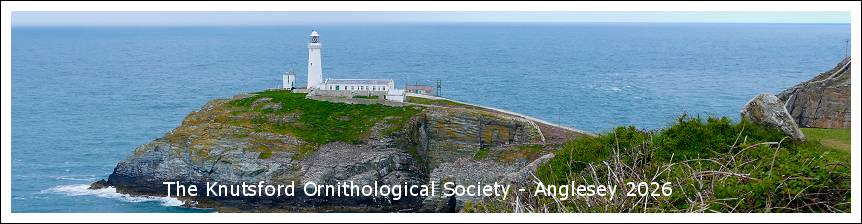
Knutsford Ornithological Society long weekend on Anglesey - 10th to 12th May 2026
When we agreed the date for our three day trip to Anglesey this May, I don't think we took into consideration the Ice Saints. Folklore warns of the 'ice saints', Mamertus, Pancras,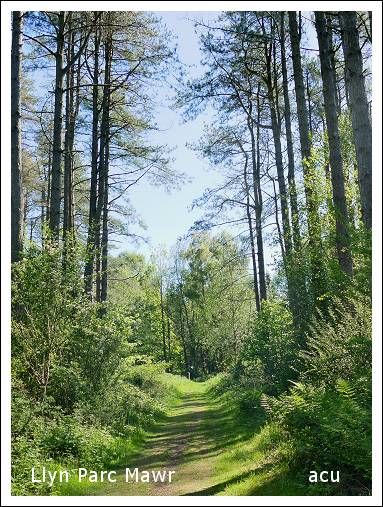 Servatius and Boniface, who bring cold snaps on their feast days, from May 11 to 14. Servatius and Boniface, who bring cold snaps on their feast days, from May 11 to 14.
Sheep farmers were particularly wary of their flocks, with one old proverb going: 'He who shears his sheep before St Serviatus's Day, loves his wool more than his sheep!
Just coincidence, perhaps, that the weather was "bracing" for the duration for our stay on Anglesey; windy and cool but mainly dry, with long periods of unbroken sunshine. I found a local weather station, on the island, that showed the maximum temperatures recorded on the 10th, 11th and 12th as
12.4⁰
C,
11.4⁰
C and
14.8⁰
C respectively. My own station here in Mobberley showed the average temperature for the first two weeks in May this year was
9.7⁰C
compared to
13.3⁰C
in 2025.
Nevertheless we all know that there's no such thing as bad weather, only the wrong clothes and I think all 13 participants took along a selection of gear to cope with anything nature was likely to throw at us!
Day one .... Llyn Parc Mawr community woodland & Malltraeth.
The woodland covers 150 acres of Newborough Forest next to the A4080 road between Newborough and Malltraeth and is run by a local community group, following a management agreement with Natural Resources Wales.
Our KOS Chairman, Sheila Blamire, had organised the three day jolly and had volunteered to also lead the first day's activities. She took us along the "Red squirrel trail", about 2.4km through towering conifers with a dense, lush layer of vegetation - shrubs, ferns, saplings and mosses growing beneath the main canopy.
There was much activity with Blackcaps and Goldcrests the first entries on the trip list. I had predicted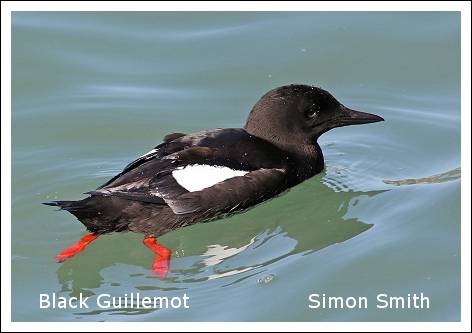 about 80 species, so we were off to a good start. Moving on along the trail some of the expected list-fillers were added including Swallow, House Martin, Mistle Thrush and Willow Warbler etc. A large, covered, observation hide overlooks the pool in the centre of the reserve from where we recorded Canada and Greylag geese, Coot, Mallard, Little Grebe and Little Egret. about 80 species, so we were off to a good start. Moving on along the trail some of the expected list-fillers were added including Swallow, House Martin, Mistle Thrush and Willow Warbler etc. A large, covered, observation hide overlooks the pool in the centre of the reserve from where we recorded Canada and Greylag geese, Coot, Mallard, Little Grebe and Little Egret.
So, we went in search of the birds whilst Bob Groom had sat quietly on a bench next to the car park and let the birds come to him. He was rewarded with views of a Lesser Spotted Woodpecker: only day one and already the bird of the trip!! Lunchtime butties were taken on the benches next to the car park before we moved on to part two of the day, a stroll along The Cob, a long man-made embankment or bund leading to the village of Malltraeth. After a short stretch through woodland the path opens up, revealing extensive views across Malltraeth Marsh.
In the vegetation alongside the path we had Stonechat, Sedge Warbler and Garden Warbler and, on the Cob Pool, Grey Heron, Black-tailed Godwit and Lapwing. At the end of the Cob, on the mud-banks of the Cefni river, three Whimbrel and a nice male Scaup. That was the official end of day one but some of the party drove down to the old Holyhead harbour where they ticked off Black Guillemot bring the day total to a solid 49 different species.
Our accommodation for the two night stay was the Holyhead Premier Inn, as usual we found the rooms clean and tidy, and everything worked. The food was fine, nothing to write home about of course, but perfectly adequate and, with an all-you-can-eat breakfast policy, there was no need for anything substantial come lunchtime!
Day two ..... South Stack and Cemlyn Bay.
The weather for day two of the trip (11/5) was kind to us, wall to wall sunshine but with a cold, stiff wind from the north west - straight down from the arctic, but no rain and that was the main thing as both locations are exposed to the elements. We've visited Cemlyn and South Stack many times over the years so I was happy to be "volunteered" to act as the day leader!
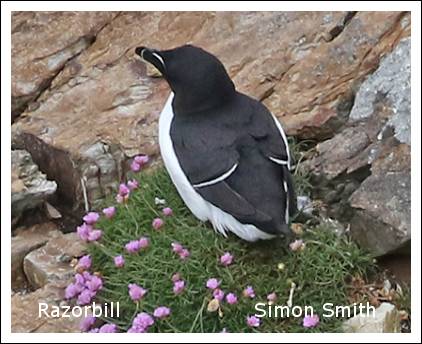
We left the Premier Inn at 9am for the short drive to South Stack, arriving in the bottom (Ellin's Tower) car park at 9:15am. From the car park there is a gravel path down to Ellin's Tower with great views across to the mountains of Snowdonia. We had arrived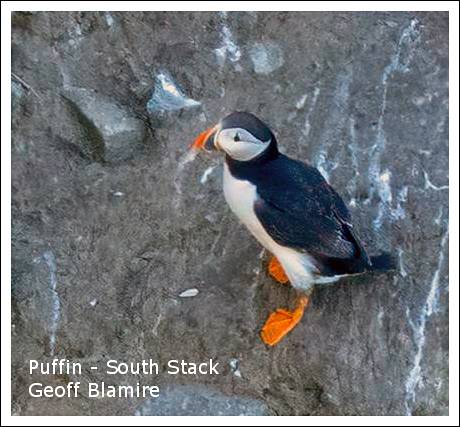 before the tower had opened for the day, so we sheltered behind it and did a few minutes sea watching; Razorbills and Guillemots were prominent on the sea whilst overhead Gannets, Kittiwakes and Fulmars battled against the wind. before the tower had opened for the day, so we sheltered behind it and did a few minutes sea watching; Razorbills and Guillemots were prominent on the sea whilst overhead Gannets, Kittiwakes and Fulmars battled against the wind.
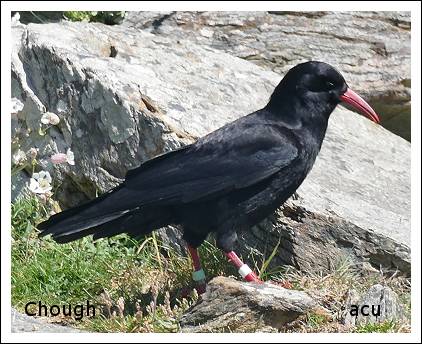
Leaving Ellin's Tower we made our way up the steep slope that leads to the cafe and on up to the end of the road, to a point overlooking the lighthouse. So far we hadn't seen or heard any choughs but eventually we came across two birds feeding amongst the rocks on the hillside and managed some pretty decent record shots (above). We found a nice sheltered spot out of the wind and enjoyed the sunshine. It was most pleasant out of the wind, a reminder that we're well into the month of May and the sunshine can be surprisingly warm.
Many of the party were keen to find the Puffins that were somewhere on the cliff face amongst the Guillemots and Razorbills. There are 410 steps down to the lighthouse (and the same number back again!). I don't think anyone went all the way to the bottom but some managed part of the way and actually located one of the "sea parrots!".
We had lunch in the cafe, in my case I decided to judge how an RSPB scone would stack up against one from Goostrey's here in Mobberley. It compared well, especially as the young lady behind the counter suggested I try it with jam and cream, something that's frowned upon at home!
Walking back down the hill to the car park Raven and Whitethroat were added to the list, the latter gave very good views as it fed in a roadside bramble bush.
As arranged, everyone met back at the cars at 1pm, ready for the 45 minute journey across to Cemlyn Bay.
 We managed two new birds on the journey, Red Kite and Kestrel before arrival at the agreed location, the preferred car park on the west side of the reserve. We managed two new birds on the journey, Red Kite and Kestrel before arrival at the agreed location, the preferred car park on the west side of the reserve.
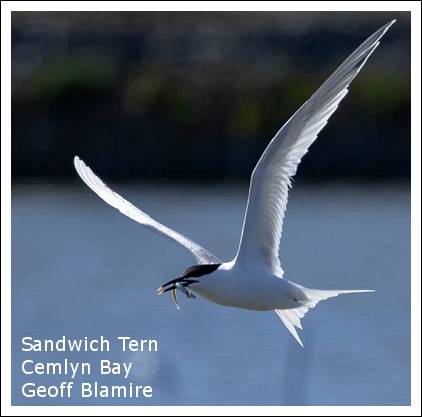
Sandwich Terns were calling noisily above the car park and a Sedge Warbler was singing from the depths of a bramble as we walked down towards the shingle beech.
The main attraction at Cemlyn Bay is the tern colony, it's on an island in the centre of the freshwater lagoon. It's early in the season nevertheless the Arctic and Common Terns had returned in good numbers but, unfortunately, no Roseate Terns had appeared so far - but they were expected at anytime. This information came from a charming young lady warden who was employed by the North Wales Wildlife Trust to guard the site and liaise with the public for the two months of the breeding season. (in fact the first Roseate returned the very next day!).
We didn't see any Ringed Plovers on the island but there were a number of passing Dunlin feeding along the shore.
Bob and Karina had gone to an alternative location and were able to add to our trip list - Reed Warbler, Greenshank, Sand Martin and Mute Swan.
We'd had a successful day's birding and managed no less than 24 new species between us!
The final morning of our three days in Wales dawned grey and drizzly and we decided to drive the short distance down the A55 to the RSPB's Cors Ddyga nature reserve. It was still a bit wet as we arrived but that wasn't going to stop the reception committee and the Cetti's Warbler exploded into action just a few yards 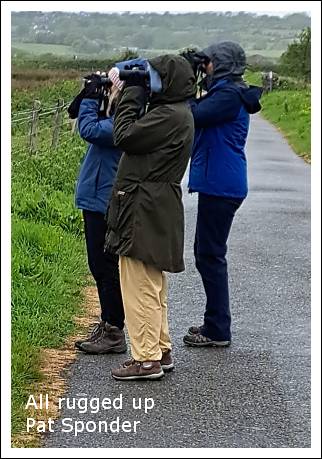 away as we opened the car doors! We have visited this reserve before, but it was a long time ago and there weren't any Cetti's in those days. away as we opened the car doors! We have visited this reserve before, but it was a long time ago and there weren't any Cetti's in those days.
This is an easy reserve to navigate - there's a long straight road down to a bridge about a kilometer away where you can turn left and follow the paths around the perimeter and back to the car park.
There seemed to be Sedge Warblers in every bush, leaping into the air in display flight before returning to the same location as were Meadow Pipits, only in their case it was ground to ground. The pools either side of the path hosted a variety of wildfowl - Shelduck, Mallard, Tufted Duck, Shoveler and even a Garganey that showed briefly before slipping into the reeds. (we did know it was there beforehand!). The rain had stopped before we reached the bridge and we spent a few minutes scanning the area picking up Buzzards and a Red Kite. Jacquie and Sue decided to do the rest of the circular walk, whilst the rest of us walked back towards the cars; on the way the first Swifts of the weekend powered over. The early breeders have done well, we saw many Greylag family groups, I'm guessing around 40 youngsters in total, just in that part of the reserve. Lapwing chicks were everywhere, their parents warning off any intruders - including us!
Back at the start we walked back towards the entrance before turning down a track towards an old brick chimney where a chap we'd met on arrival had been listening to a booming Bittern earlier in the morning. No Bittern for us but we did hear lots of Willow and Sedge Warblers in this area and rounded off the morning with a nice male Marsh Harrier, a bird seen by Jacquie and Sue too.
Jacquie and Sue decided to visit the Little Tern colony at Gronant on the way back to Cheshire, we stopped off at the RSPB Conwy reserve for a slice of Bara Brith and a coffee before a quick wizz around the hides where we added just Great Crested Grebe to the tick list - together with Jacquie and Sue's Little Terns that brought our final to 89 different species. A commendable effort for just three day's birding. Our thanks go to the drivers and to Sheila for all the work she did in the weeks leading up to our visit.
Species recorded on Anglesey 10th to 12th May 2026
Mute Swan, Greylag Goose, Canada Goose, Shelduck, Gadwall, Mallard, Shoveler, Garganey, Tufted Duck, Scaup, Great Crested Grebe, Little Grebe, Fulmar, Gannet, Cormorant, Shag, Grey Heron, Great White Egret, Little Egret, Marsh Harrier, Sparrowhawk, Buzzard, Red Kite, Kestrel, Pheasant, Oystercatcher, Lapwing, Dunlin, Black-tailed Godwit, Whimbrel, Greenshank, Black-headed Gull, Mediterranean Gull, Herring Gull, Lesser Black-backed Gull, Great Black-backed Gull, Kittiwake, Sandwich Tern, Common Tern, Arctic Tern, Little Tern, Guillemot, Razorbill, Black Guillemot, Puffin, Woodpigeon, Collared Dove, Great Spotted Woodpecker, Lesser Spotted Woodpecker, Swift, Sand Martin, Swallow, House Martin, Meadow Pipit, Pied Wagtail, Wren, Dunnock, Robin, Stonechat, Wheatear, Blackbird, Song Thrush, Mistle Thrush, Blackcap, Garden Warbler, Whitethroat, Chiffchaff, Willow Warbler, Sedge Warbler, Reed Warbler, Cetti's Warbler, Goldcrest, Long-tailed Tit, Blue Tit, Great Tit, House Sparrow, Nuthatch, Starling, Chough, Magpie, Jackdaw, Rook, Carrion Crow, Raven, Chaffinch, Goldfinch, Greenfinch, Linnet, Reed Bunting
[ ✓ 89]
|
|
|